A clear roadmap through energy complexity—aligning infrastructure, supply, and capital.
A clear roadmap through energy complexity—aligning infrastructure, supply, and capital.
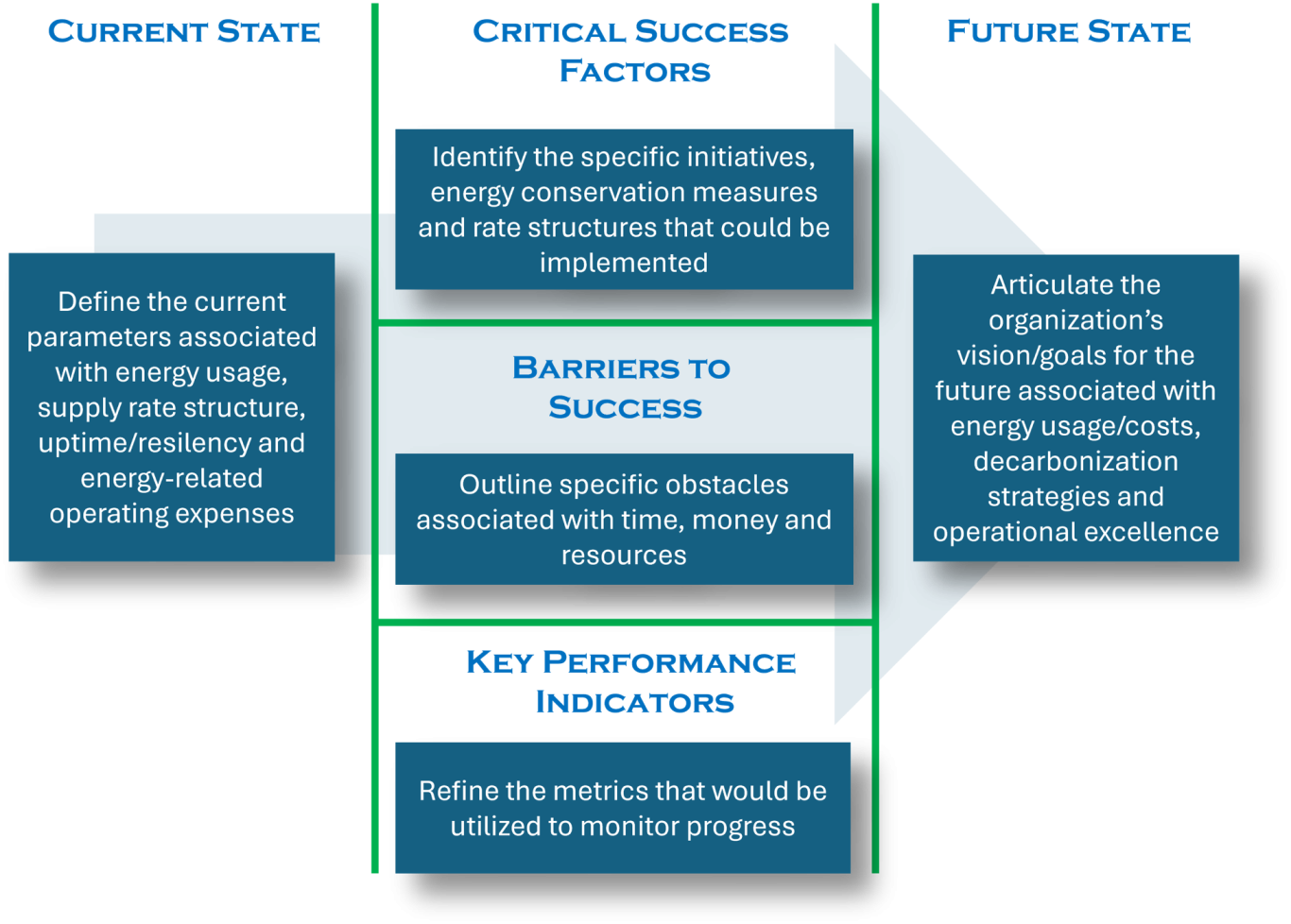
Synergent engagements move organizations from current state to future state—integrating infrastructure, procurement, and capital strategy.
The work unfolds across three phases.
Phase 1: Discovery & Strategic Alignment
We begin with a facilitated journey involving senior leadership and key stakeholders.
This is not a presentation or audit. It is an interactive, candid exploration designed to surface priorities, assumptions, constraints, and opportunities—creating space for strategic clarity and practical insight.
In this phase, we:
Dialogue is encouraged. Assumptions are challenged. Trade-offs are made explicit.
Outcome: A shared understanding of current state, desired future state, and the structural shifts required to move between them.
Phase 2: Roadmap & Strategic Design
Discovery insights are translated into a practical, sequenced roadmap.
This roadmap defines:
The roadmap guides capital allocation, operational planning, and governance decisions—not shelfware.
Outcome: Organizational alignment around priorities, sequencing, capital deployment, and measurable performance targets.
Phase 3: Execution Support & Performance Enablement
Strategy must translate into measurable operational and financial performance.
Synergent supports implementation in a manner aligned with the organization’s structure and internal capacity—ranging from advisory oversight to embedded, fractional leadership support.
Execution support may include:
Outcome: Measurable improvements in cost structure, risk profile, capital efficiency, and enterprise value.
We need your consent to load the translations
We use a third-party service to translate the website content that may collect data about your activity. Please review the details in the privacy policy and accept the service to view the translations.